Archives
- 2026-09
- 2026-08
- 2026-07
- 2026-06
- 2026-05
- 2026-04
- 2026-03
- 2026-02
- 2026-01
- 2025-12
- 2025-11
- 2025-10
- 2025-09
- 2025-03
- 2025-02
- 2025-01
- 2024-12
- 2024-11
- 2024-10
- 2024-09
- 2024-08
- 2024-07
- 2024-06
- 2024-05
- 2024-04
- 2024-03
- 2024-02
- 2024-01
- 2023-12
- 2023-11
- 2023-10
- 2023-09
- 2023-08
- 2023-07
- 2023-06
- 2023-05
- 2023-04
- 2023-03
- 2023-02
- 2023-01
- 2022-12
- 2022-11
- 2022-10
- 2022-09
- 2022-08
- 2022-07
- 2022-06
- 2022-05
- 2022-04
- 2022-03
- 2022-02
- 2022-01
-
Zalcitabine No specific inhibitor of KCC
2022-06-21
No specific inhibitor of KCC has progressed to clinical trials, however, although compounds like H74 were shown to specifically target KCC over the related Na+-K+-2Cl− cotransporter (NKCC) (Ellory et al., 1990). This molecule, or its related analogues, represent compounds of promise. Simple Mg suppl
-
The NVC response in the diseased or aging brain may
2022-06-21
The NVC response in the diseased or aging L-α-Aminoadipic Acid may be altered, including changes in both the chemical mediators of NVC, ion channel behaviour, and the dynamics of the vascular system. For example, in Alzheimer’s disease the production of NO is shown to be inhibited (Lourenço et al.,
-
Nicastrin is heavily glycosylated contributing KDa to the
2022-06-21
Nicastrin is heavily glycosylated, contributing 40–70KDa to the molecular weight of human γ-secretase. Among the 16 predicted N-linked glycosylation sites in the ECD, 11 have been unambiguously identified. The glycans appear to mostly stabilize the local structure, thus contributing to the folding a
-
br Results br Discussion The inflammasome
2022-06-21
Results Discussion The inflammasome consists of the sensor molecule nucleotide oligomerization domain (NOD)-like receptors (NLRs), the adaptor protein ASC, and the Vilazodone Hydrochloride australia molecule CASP1 (Guo et al., 2015). Among the different types of inflammasome, the NLRP3 inflamm
-
br Results br Discussion Glucose homeostasis is regulated
2022-06-21
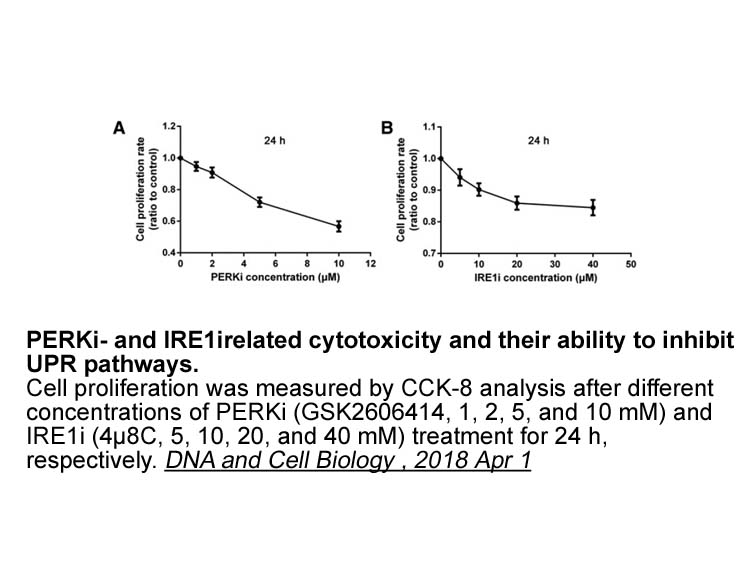
Results Discussion Glucose homeostasis is regulated by a complex and intricate signaling network involving multiple organs. The BA nuclear receptor FXR is integrated into this regulatory network and participates in glucose handling and metabolism. Intestinal FXR favors glucose 2×Taq PCR Master
-
In recent years many studies have demonstrated that the
2022-06-21
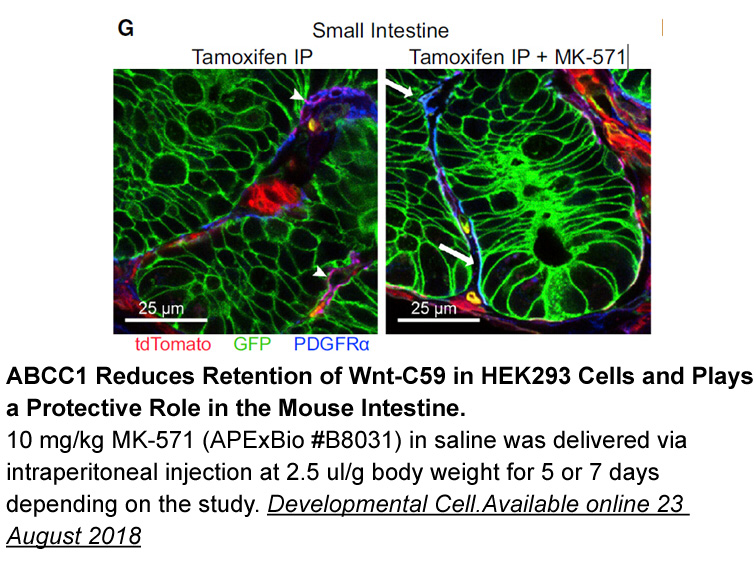
In recent years, many studies have demonstrated that the release of endogenous FPR ligands can influence severe diseases associated with inflammation, including systemic inflammatory response syndrome (SIRS)20, 21 and cancers, such as glioblastoma as well as gastric and colorectal cancer 22, 23, 24.
-
As recently reviewed a picture
2022-06-21

As recently reviewed, a picture is emerging where metabolites through GPCR sensors act as important autocrine and paracrine regulators of basic metabolic mechanisms (Husted et al., 2017). The concept of 20-HETE acting through FFAR1 as an autocrine amplifier of GDIS on β monensin receptor together w
-
Histamine in the central nervous system
2022-06-20
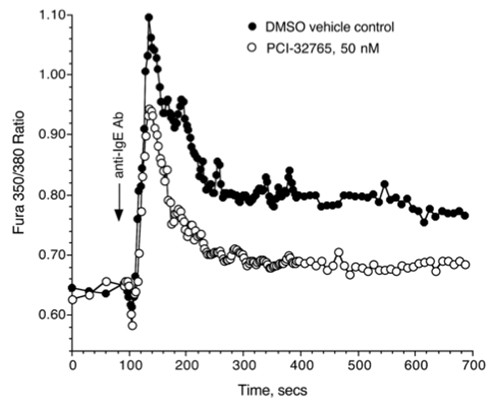
Histamine in the central nervous system is produced mainly in the tuberomammillary nucleus and is implicated in learning and memory as well as sleep and wakefulness, feeding and drinking, and neuroendocrine regulation . For instance, treatment with antihistamines not only produces drowsiness but als
-
For further understanding of the interaction between
2022-06-20
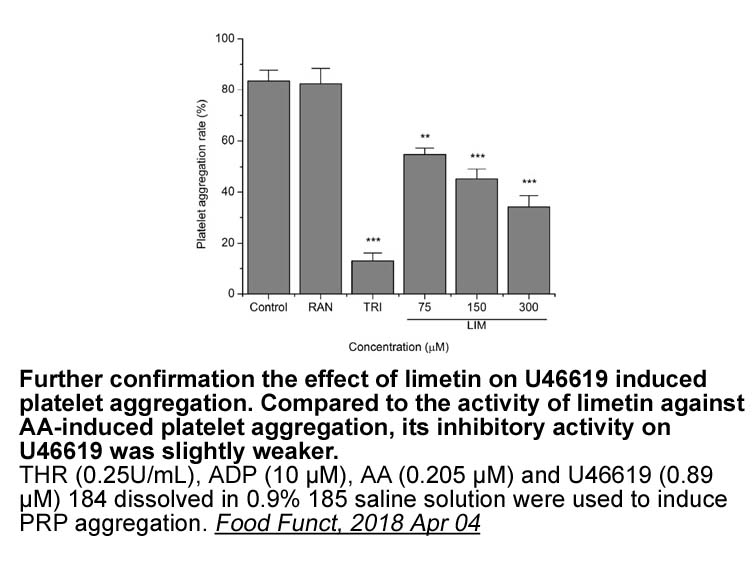
For further understanding of the interaction between these inhibitors and proteins (BRafV600E and HDAC1) for guiding the SAR, compound 10e, the most potent compound of this series, was chosen as a representative for docking into the BRafV600E (PDB code: 1UWJ) and HDAC1 (PDB code: 1C3R), revealing ex
-
br Family A Receptors as
2022-06-20
Family A Receptors as Promiscuous Sensors for Peptone and Free Fatty Acids (FFAs) In addition to the family C 7TM receptors, several family A 7TM receptors are promiscuous in their ligand preferences, and several respond to organic nutrients from food, notably protein degradation products and FFA
-
lxr agonists It has been shown that GPR
2022-06-20
It has been shown that GPR55 receptors coupled to G12/13 proteins down-regulate reactive oxygen species (ROS) production and degranulation in human neutrophils [9]. MCs degranulation stimulated by IgE/Ag also requires the generation of ROS [64]; therefore, the possibility to explore the inhibitory a
-
Typically upon chronic agonist exposure
2022-06-20

Typically, upon chronic agonist exposure GPCRs undergo desensitization and internalization resulting in a loss of receptor responsiveness over time (Drake et al., 2006, Kelly et al., 2008). However, not all GPCR systems conform to this model of acute agonist-mediated regulation. Some receptors have
-
br Author contributions br Acknowledgements The work was fin
2022-06-20
Author contributions Acknowledgements The work was financially supported by a grant from the Investigator-Initiated Studies Program (Ref. #38124) from Merck Sharp & Dohme, and, in part, from Research Grants Council of the Hong Kong Special Administrative Region, China (Ref. No.: 14110314), awa
-
Adenosine triphosphate ATP is thought to be a crucial molecu
2022-06-20
Adenosine triphosphate (ATP) is thought to be a crucial molecule in acute pain signaling in the DRG, as well as in the development and maintenance of chronic pain (Burnstock, 2009, Burnstock, 2013, Burnstock, 2014, Chizh and Illes, 2001). Extracellular ATP activates the ionotropic P2X receptors (Bur
-
Glycine regulates several brain functions
2022-06-20
Glycine regulates several brain functions and glycine transporters significantly contribute in such processes. In previous work we reported calpain sensitive regions in N-terminal domains of GlyT1a and GlyT1b (Baliova and Jursky, 2005). Here we show that distal part of glycine transporter GlyT1C-ter
8149 records 442/544 page Previous Next First page 上5页 441442443444445 下5页 Last page